Equipment nameplates
Equipment nameplates and metal data plates for OEM machinery.
Quote custom equipment nameplates, engraved metal data plates and machinery tags with serial numbers, QR codes, stainless steel or aluminum material, screw holes, 3M adhesive backing and MOQ from 100 pieces.
Industrial identification
Specify the plate around how it will be installed.
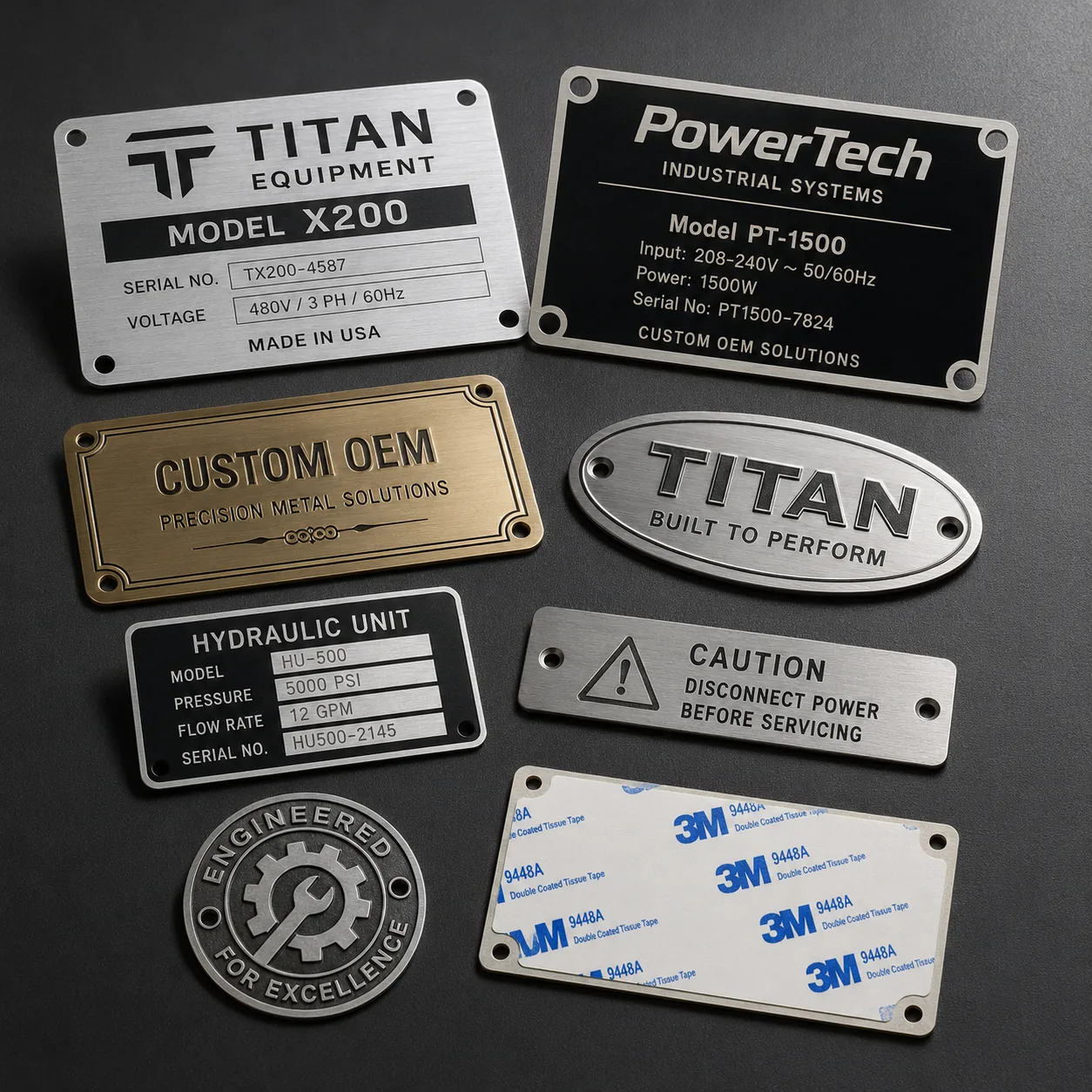
Equipment nameplates need practical production details before quoting: plate size, thickness, data fields, material, mounting method, surface environment and whether each plate carries unique serial data. These decisions affect artwork layout, process choice, durability and packing.
For machinery labels and OEM data plates, send a drawing if screw holes, rounded corners, adhesive backing or exact hole positions are required. Serial numbers, QR codes and model fields can be prepared from spreadsheet data. For scannable asset labels, compare our custom QR code metal tags; for broader OEM applications, see custom industrial nameplates.
- Materials: stainless steel, aluminum, brass or plated metal.
- Processes: engraving, digital printing, etching, raised detail or recessed detail.
- Mounting: screw holes, rivet holes, slots, 3M tape or adhesive backing.
- Data: model number, serial number, warning text, QR code and voltage fields.
- Typical MOQ: 100 pieces, adjusted by material, process and variable data.
- Lead time: about 7 days for sample and about 15 days for bulk production.
Material and mounting choices
Choose equipment nameplates by environment, data and installation method.
This is the fastest way to turn a broad equipment nameplate inquiry into a quote-ready specification.
| Requirement | Recommended option | Buyer note |
|---|---|---|
| Indoor machine label | Aluminum or plated metal data plate with printed or engraved fields. | Good for model names, voltage data and brand plates when exposure is limited. |
| Outdoor or humid environment | Stainless steel nameplate with engraving, etching or protected printing. | Confirm corrosion expectations, cleaning chemicals and whether RoHS documents are required. |
| Permanent mechanical mounting | Screw holes, rivet holes, slots or custom hole spacing from a drawing. | Send hole diameter, center-to-center spacing and edge distance before artwork approval. |
| Flat surface mounting | 3M adhesive backing or custom adhesive tape. | State the surface material and operating temperature so backing can be reviewed. |
| Variable serial labels | Engraved, printed or etched serial numbers and QR codes from spreadsheet data. | Send Excel data with one row per plate to reduce proofing errors. |
Equipment identification basics
What is an equipment nameplate?
A useful equipment nameplate combines product information with a mounting method that suits the machine.
An equipment nameplate is a metal identification plate fixed to machinery, electrical equipment, tools, control cabinets or other assets. It may show a company logo, model number, serial number, voltage, capacity, safety instruction, QR code or traceability information. Unlike a staff name tag, it is specified around the operating environment and the way the plate will be installed.
The most important planning detail is the information hierarchy. A model number or warning message may need to be read quickly, while a logo can be smaller. If every plate carries a different serial number, the variable fields should be clearly separated from the fixed artwork so the factory can prepare an accurate proof and prevent data mix-ups.
- For machinery: model, serial number, voltage, capacity and manufacturer.
- For assets: asset ID, QR code, department, service date and ownership.
- For electrical products: rating information, warning text and compliance marks.
- For installation: screw holes, rivet holes, slots, adhesive backing or 3M tape.
Environment first
Match the metal data plate to the working conditions.
A plate that looks correct indoors may not be the right specification for heat, moisture, oil or abrasion.
Indoor machinery
Aluminum, plated metal or brass can suit indoor equipment when the plate is protected from constant moisture and harsh cleaning chemicals. Engraving and digital printing are both useful depending on whether the design is mostly text or includes color artwork.
Outdoor or humid use
Stainless steel is a practical starting point for outdoor equipment nameplates. Review corrosion expectations, direct sunlight, rain, cleaning chemicals and the required contrast before choosing engraving, etching or protected printing.
Oil, heat or abrasion
Industrial equipment may need a more durable marking method and a mounting system that will not lift or loosen. Provide the approximate temperature, chemical exposure and cleaning routine so the material and backing can be reviewed before sampling.
Marking methods
Choose the marking process by the information you need to preserve.
Engraved metal tags, printed panels and raised details solve different identification problems.
| Marking method | Good fit | What to confirm before sampling |
|---|---|---|
| Laser or mechanical engraving | Serial numbers, model fields, asset IDs and restrained one-color layouts. | Text size, contrast, line weight, material and whether the mark must remain readable after wear. |
| Etching | Fine text, logos and durable recessed information on suitable metal surfaces. | Surface finish, minimum line width, color fill and chemical or outdoor exposure. |
| Digital printing | Logos, warning panels, multiple colors, QR codes and flat variable data. | Ink protection, scanning contrast, surface glare, abrasion and cleaning conditions. |
| Raised or recessed detail | OEM brand plates, dimensional logos and plates that need a tactile hierarchy. | Relief depth, edge clearance, thickness, tooling and the weight of the finished plate. |
The custom industrial nameplates page covers broader industrial label applications, while this page focuses on equipment nameplates and metal data plates for machinery identification.
Production workflow
From equipment drawing to finished nameplates.
A clear production route makes variable data, mounting details and repeat orders easier to control.
1. Review the drawing
Confirm the finished size, corner radius, thickness, hole diameter, hole spacing, edge distance and the surface where the plate will be installed. A drawing is more reliable than a screenshot when holes or slots must align with the machine.
2. Approve the data proof
Separate fixed artwork from variable serial numbers, QR codes, model names and warning fields. Review the actual text at the finished size, especially when the plate contains many fields or long serial numbers.
3. Sample and inspect
Use a sample or approved pre-production proof to check contrast, finish, mounting position and readability. After bulk production, inspect names, quantities, edges, attachment and packing before shipment.
For a broader view of forming, finishing, inspection and packing, read the metal badge manufacturing process guide.
Avoid rework
Common equipment nameplate mistakes.
Most production delays come from missing installation or data information rather than the metal itself. Resolve these points before a supplier prepares the sample.
- Choosing a plate from a screen image without confirming the actual finished size.
- Sending serial data in an unstructured message instead of one clear spreadsheet.
- Leaving hole position, edge distance or adhesive surface unspecified.
- Using a wearable name tag specification for a machine exposed to oil, heat or weather.
- Approving a logo proof without checking small warning text at the final scale.
- Comparing unit prices when one quote excludes tooling, backing, packing or freight.
Quote checklist
Send these details for accurate pricing.
Drawing and Size
Provide length, width, thickness, corner radius, hole diameter and hole spacing.
Marking Method
Choose engraving, printing, etching or stamped relief based on contrast, durability and budget.
Variable Data
Send serial numbers, QR codes and field data in Excel when every plate is different.
Related pages
Compare equipment plate options.
Engraved Metal Name Plates
General engraved plates, serial tags and OEM metal labels.
View name platesCustom Industrial Nameplates
Industrial metal tags with serial data, screw holes and durable finishes.
View industrial platesEquipment Plate Case Study
See a real equipment name plate project with mounting and data decisions.
View caseFAQ
Equipment nameplate questions.
Can equipment nameplates include serial numbers and QR codes?
Yes. Serial numbers, model fields, warning text, barcodes and QR codes can be engraved, printed or etched from supplied data.
Which mounting options are available?
Common mounting choices include screw holes, rivet holes, slots, rounded corners, 3M adhesive backing and custom hole layouts.
What materials work for equipment nameplates?
Stainless steel, aluminum, brass and plated metal are common choices depending on environment, durability needs and budget.
What marking method lasts longest outdoors?
Stainless steel with engraving or etching is a common starting point for durable outdoor identification. The correct method depends on moisture, chemicals, abrasion, heat and the required contrast.
Can every plate have a different serial number?
Yes. Fixed artwork and variable model numbers, serial numbers, QR codes or voltage fields can be prepared from a clear spreadsheet and checked in a proof.
What should I send for a quote?
Send the drawing, finished size, thickness, material, marking method, mounting details, environment, quantity, data file, packaging and delivery country.