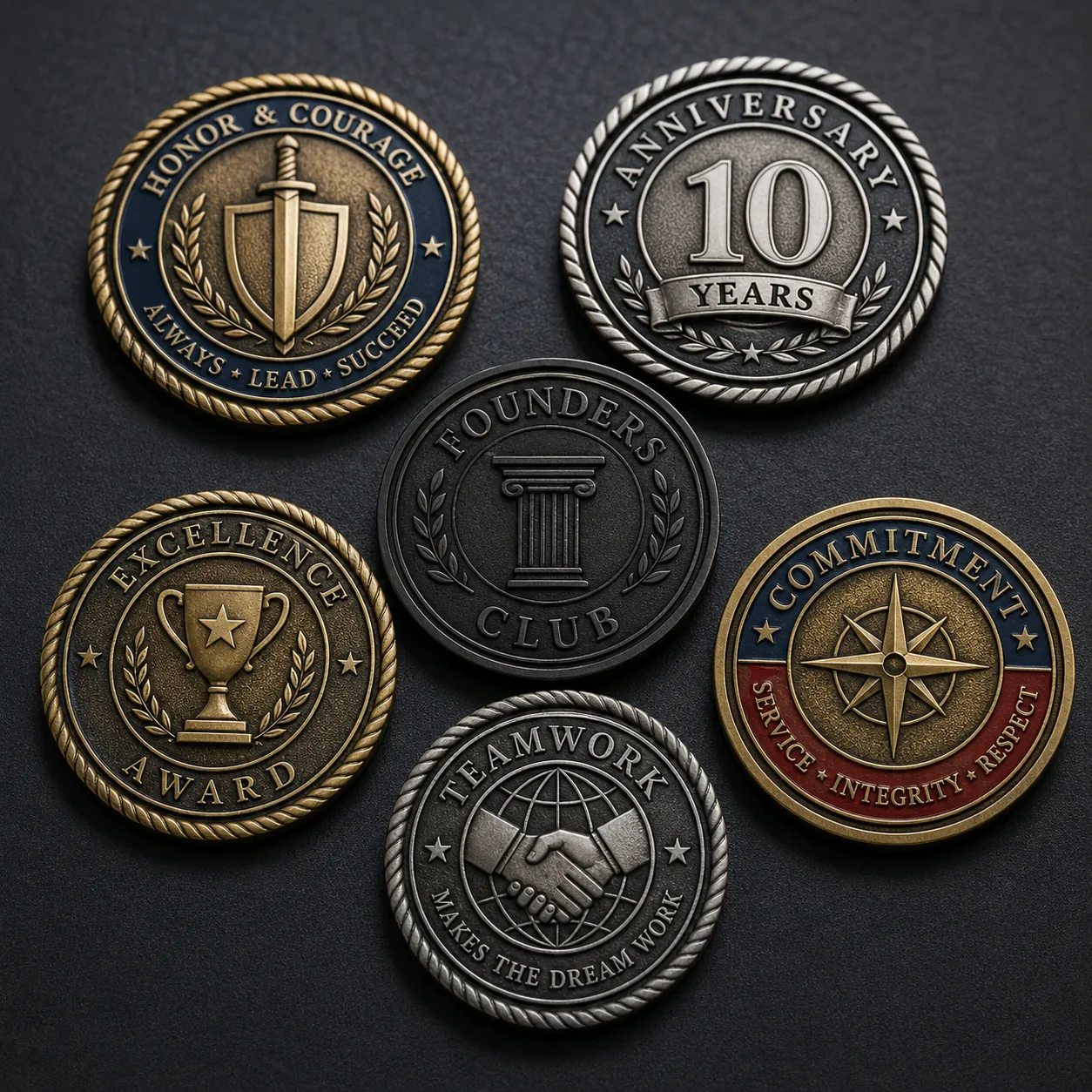
Start with the purpose of the coin
A custom challenge coin, commemorative coin, event token, award medallion or collectible gift may use different size, relief, edge and packaging choices. Define the use case before finalizing artwork because the same design may need a different thickness, plating or presentation box depending on whether it is sold, awarded, exchanged or used as a token.
For military, police, fire department and corporate challenge coins, the front side normally carries the main emblem. The back side often includes a motto, date, unit name, event title, serial number or sponsor mark. For custom metal tokens used in games, attractions, bars or membership programs, the design should prioritize readability, repeat handling and low-friction packing.
Plan front and back artwork separately
Most custom metal coins use one side for the logo or emblem and one side for text, date, serial number or event message. Keep small text away from the edge and avoid thin lines that cannot hold relief. If the coin includes a shield, mascot, building, map or portrait, mark which elements should be raised, recessed, polished, antique or color-filled.
Send vector artwork when possible, such as PDF, AI, EPS or editable PSD. If only a JPG or PNG reference is available, include notes for the most important details so the production artwork can be redrawn correctly before sampling.
Choose 2D or 3D relief
2D relief is clean and economical for logos, text, badges, symbols and geometric artwork. 3D relief is better for portraits, mascots, sculpted buildings and organic shapes where a rounded surface makes the coin feel more premium. Many custom challenge coins combine 2D text with a 3D center emblem to balance cost and visual depth.
Confirm plating and enamel color
Antique gold, antique silver, antique copper and black nickel are common for custom metal coins because recessed areas remain visible after finishing. Polished gold or polished silver can look brighter, but fine details may need stronger contrast. Enamel color can highlight flags, logos, shields or event marks, while metal-only designs feel more classic and durable.
If your design uses brand colors, include Pantone references when available. For antique plating, also confirm whether the final coin should look dark and traditional or cleaner with only light antique contrast.
Select edge and thickness details
Reeded, rope, wave, flat and diamond-cut edges make a metal coin feel more finished. A thicker coin feels more substantial in hand, but it also changes weight, shipping cost and packaging. A common starting point is around 40 mm diameter and 5 mm thickness, then adjusted based on artwork detail and budget.
Packaging affects perceived value
Bulk token coins can ship in bags, while premium commemorative coins usually use capsules, velvet boxes, acrylic stands or printed presentation cards. For distributor programs and retail products, confirm barcode labels, carton marks and packing quantity per inner box before production begins.
Quote checklist
- Front and back artwork, including editable files if available.
- Target size, thickness, quantity and expected order deadline.
- Plating preference: antique gold, antique silver, antique copper, black nickel, polished gold or polished silver.
- Relief preference: 2D, 3D, or a mixed 2D and 3D challenge coin design.
- Edge style, enamel color, numbering, QR code or other variable data.
- Packaging requirement, such as bulk bag, capsule, velvet box or presentation card.
Related production pages: custom metal coins, custom challenge coins, antique metal coins and metal tokens and medals. For finish decisions, compare the gold, silver and antique plating guide.
How to get a faster custom challenge coin price
For a quote-ready request, send the coin diameter, thickness, quantity, front artwork, back artwork, plating preference, color areas, edge style and packaging requirement. If the coin has numbered pieces, QR codes or different names, send the variable data in Excel before artwork proofing.
A typical starting MOQ is 100 pieces per design. Sampling is usually about 7 days after artwork approval, and bulk production is usually about 15 days after sample confirmation. Timelines can change when the order uses complex 3D relief, two-sided enamel, special edge cutting or premium presentation packaging.