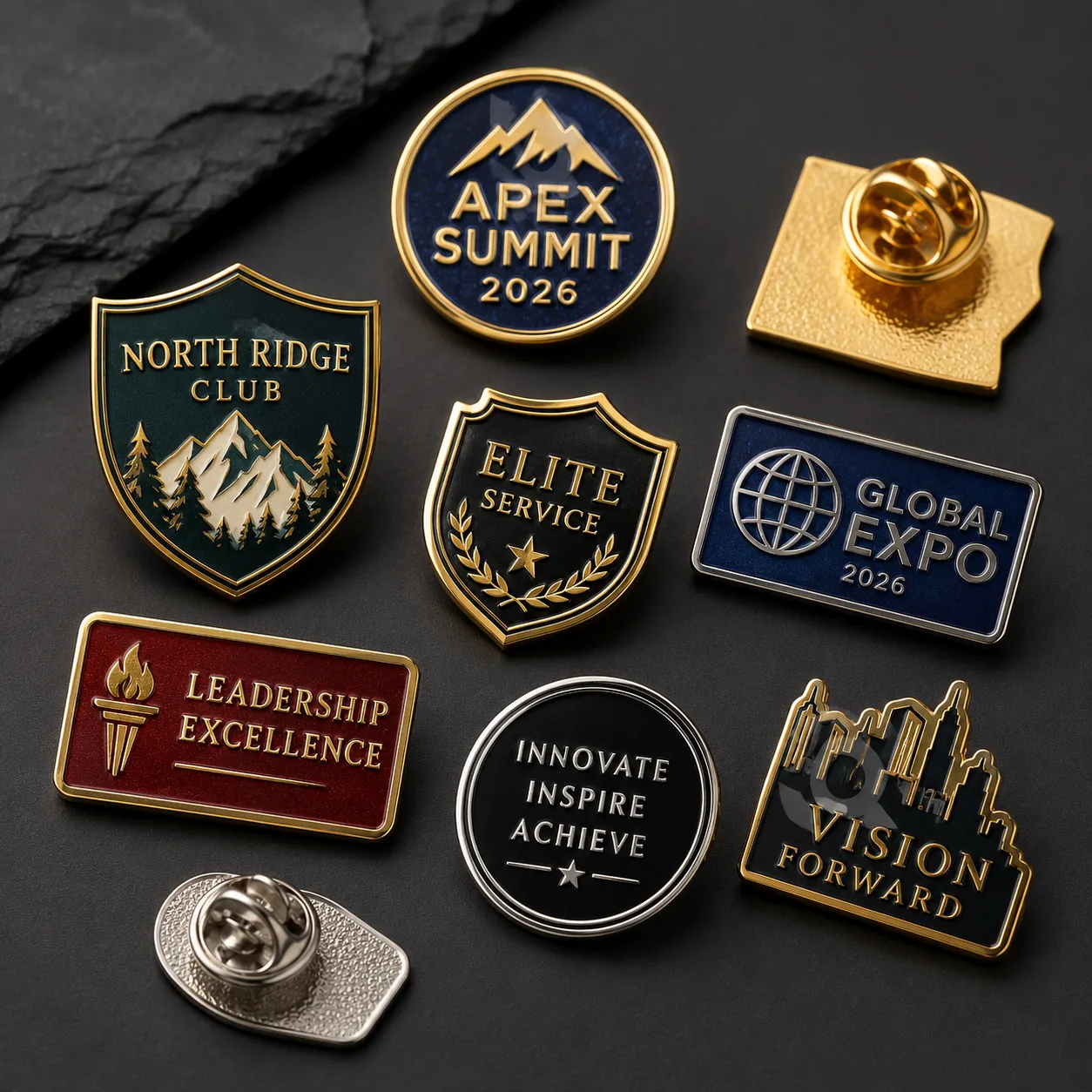
Good custom metal badges start with clear decisions. The factory needs to know the badge size, base metal, process, plating, color, back attachment, packaging and order quantity. When these details are missing, quotes vary widely and samples can miss the buyer's expectations.
Choose the badge process first
Die struck metal badges are ideal for clean logos, official emblems and antique finishes. Soft enamel badges use raised metal borders and recessed color. Hard enamel badges are polished smooth and feel more premium. Zinc alloy casting works well for irregular shapes, deep relief and larger badge designs.
Pick plating to match the market
Gold and nickel plating are common for retail and corporate badges. Antique brass, antique silver and antique copper make relief details more visible. Black nickel and matte plating can make a modern metal badge logo feel more distinctive.
Back attachment changes the user experience
Butterfly clutch is cost-efficient for metal pin badges. Safety pin backs are common on larger badges. Magnetic backs are useful for uniforms because they avoid holes in clothing. Screw posts and adhesive backs are better for signs, bags and hard goods.
What to send for a quote
Send PSD, PDF or other available artwork, target size, quantity, plating preference, enamel colors, backing type and packing requirements. A typical order starts at 100 pieces per design, with adjustments for special processes. Sampling normally takes about 7 days after confirmation, followed by about 15 days for bulk production after sample approval.
Continue planning your custom badge
Use the badge size and thickness guide to protect small detail and control weight. Compare zinc alloy and brass when the design includes deep relief or a premium stamped finish. Then review gold, silver and antique plating before approving the sample.
View custom metal badge options, review the pricing guide or request a quote.