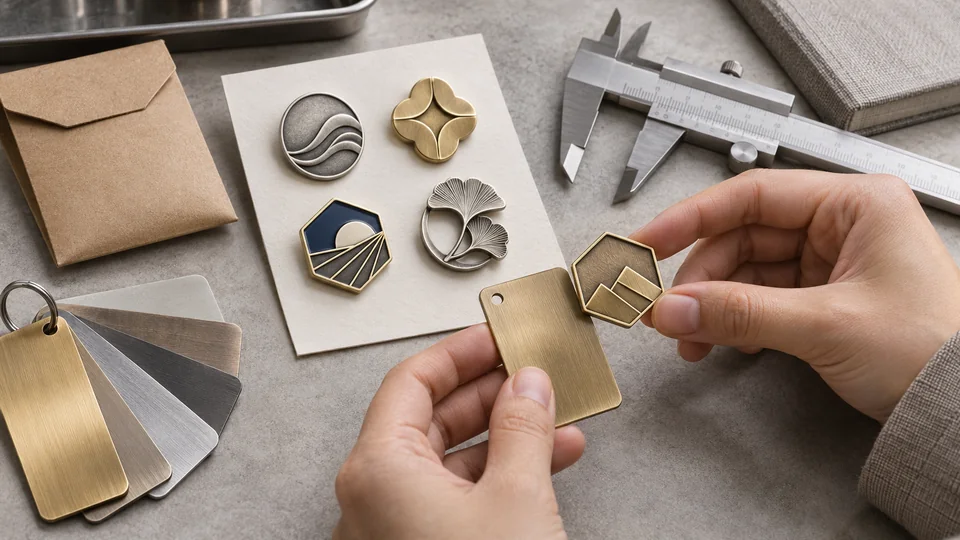
Short answer: custom metal badges can be a durable promotional product, but the word “metal” is not proof of sustainability. A responsible evaluation checks the exact alloy and any recycled content, the badge’s expected useful life, the finishing and quality process, packaging, shipping and local end-of-life options. Ask suppliers for information tied to your design and order, then make only specific environmental claims that the evidence supports.
What current buyer research says about responsible promotional products
Sustainability is part of the branded merchandise conversation, but it is only one part of the buying decision. PPAI’s October 1, 2026 article, “Better Merch Is Better Marketing,” reports a survey of 257 end buyers and 250 agency respondents. Among end buyers, 79% selected high quality as a reason merchandise is worth keeping; usefulness and good design followed at 47% and 46%. Among agencies, 43% wanted suppliers to offer more sustainable products. These figures describe branded merchandise broadly, not metal pins specifically, but they point to a practical sourcing standard: environmental intent should sit alongside quality, relevance and execution.
Consumer results add useful context. PPAI’s 2026 study of more than 3,400 consumers asked what influences first impressions of branded merchandise. Design and appearance ranked first at 51.3%, while sustainability or eco-friendliness was selected by 3.7%. A separate PPAI study, “Product Power 2026,” surveyed more than 5,000 U.S. consumers and found that 49% said a brand’s environmental commitment directly affects how trustworthy they find it; 68% identified recycled or reusable materials as a leading sustainability preference. These results ask different questions of different samples, so they are not directly comparable. Together, they suggest that a product still needs to look appealing and feel well made, while credible environmental information can shape trust.
For a badge buyer, this means avoiding two shortcuts: assuming that a metal item is automatically greener than another material, and assuming that a sustainability message can compensate for a poor design. The better brief describes who will receive the badge, why they might keep or wear it, and which environmental attributes the supplier can actually document. Quality and audience fit are useful sustainability considerations because an unwanted item has little practical value regardless of its material.
What should “sustainable custom metal badges” mean?
There is no single property that makes every custom metal badge sustainable. The term can refer to different things: recycled input material, efficient production, reduced packaging, a long useful life, responsible sourcing or a product that can be recovered after use. These attributes have different evidence requirements. A recycled-metal claim does not automatically describe the plating, enamel, pin post, clutch, backing card, shipping or the item’s overall environmental impact.
Set a boundary before you compare suppliers. Are you evaluating the metal badge only, the badge plus its backing card, the complete gift package, or the campaign from production through delivery? If one supplier reports recycled content for the metal shell and another reports it for the paper package, the percentages do not describe the same thing. Ask each supplier to identify the product component, percentage, calculation basis and supporting documents.
It helps to organize the question across the product’s life:
- Inputs: What alloy, enamel, plating, posts, clutches and packaging are used? Is any recycled content documented?
- Production: What quality controls, finishing processes, scrap practices and relevant test documents apply to this specification?
- Use: Is the badge designed for its intended wearer, purpose and expected handling, or is it likely to be discarded quickly?
- Delivery: Is the order quantity realistic, and can packaging and shipping be planned without unnecessary material or rush freight?
- End of use: Can the parts be separated, and do local collection systems accept the actual item?
This is a buyer’s screening framework, not a formal life-cycle assessment. If your organization needs to compare the total environmental footprint of several products, ask for product-specific life-cycle data or a qualified assessment using the same boundaries and assumptions for each option. A supplier’s general statement about its factory cannot, by itself, quantify the full footprint of a particular badge order.
How to assess metal and recycled content
Start by asking the manufacturer to name the base material for the actual construction. “Metal” is not a complete specification. Depending on the design and production route, a custom pin may use zinc alloy, brass, iron or another material, with separate components for the post, clutch or magnet. Finishes and decorative fills add further materials. Use the site’s guides to metal pin materials and zinc alloy vs. brass custom badges to understand product and manufacturing tradeoffs; do not treat either material guide as an environmental ranking.
For a recycled-content claim, ask for a specific percentage and the component it covers. Useful follow-up questions include:
- Does the percentage refer to the metal body, the complete badge, the package, or a named component?
- Is the content pre-consumer, post-consumer, or a combination, and how is each category defined by the supplier?
- Is the percentage calculated by weight, and does the stated total exclude coatings, enamel, posts or attachments?
- What supplier declaration, purchase record, chain-of-custody record or other document supports the figure?
- Does the evidence apply to the production location, alloy and finish being quoted, or only to a different product line?
Do not assume that one alloy is always the responsible choice. The right specification depends on the badge’s shape, level of detail, size, relief, thickness, finish and quantity. A material that can meet the design with dependable quality may be preferable to a speculative substitution that causes defects or a short useful life. Ask for a documented comparison of feasible options for your design, including cost, durability, appearance and any verified recycled-content information.
Keep the claim precise. “The badge body contains 30% recycled metal by weight” is more informative than “made sustainably,” if the percentage has been substantiated and the measurement boundary is clear. If the supplier cannot verify the figure for the order, leave it out of customer-facing copy and continue the sourcing conversation without overstating what is known.
Questions about manufacturing, plating and quality controls
Ask how the proposed badge is made and what records the supplier can share. A manufacturer may be able to discuss die striking, stamping, casting, cutting, polishing, plating, enamel filling, assembly and inspection. The right questions depend on the ordered process. For an overview of production stages, see the site’s metal badge manufacturing process guide.
For environmental or compliance-related sourcing, request information with a defined scope. For example: Which process and facility does a document cover? Is it a general company certificate, a material test, or a report on the exact product specification? What date, standard or destination market does it relate to? If the buyer needs a particular material or chemical test, identify it in the purchase brief and ask whether the supplier can provide a relevant report for the selected finish and components. Do not assume a certificate for one factory, product or finish automatically covers every badge.
Finishing deserves its own review. Gold, silver and antique plating describe appearance options, but the finish name alone does not tell a buyer about composition, process controls or regulatory suitability. Ask what the finish is, whether the supplier can provide relevant test or compliance documents for your market, and how the selected surface will be inspected for consistency and wear. Compare options using the gold, silver and antique plating guide, then confirm the production specification in writing.
Production yield also matters to the order. Artwork that cannot be manufactured consistently may lead to revisions, rework or rejected pieces. A review of line thickness, small text, color separations, relief and edge details before tooling can prevent avoidable corrections. Request an annotated digital proof, then decide whether a physical sample is needed. The custom metal badge quality checklist helps buyers examine artwork, dimensions, plating, enamel, attachments and packaging before approving the run.
Design the badge for a useful life
Durability is valuable only when the item is relevant enough to be used or kept. Begin with the recipient and purpose. A service pin for employees, a museum membership badge, a conference keepsake and a retail collectible have different expectations for weight, finish, packaging and attachment. A well-constructed badge that does not suit its audience can still become unwanted merchandise.
Make the artwork legible at the finished size. A clear silhouette, restrained detail and deliberate color palette can help the design look intentional without relying on dense text or many small features. The goal is not to make every badge minimal; it is to choose details that can be produced reliably and that matter to the person receiving the item. Ask for the final dimensions in millimeters or inches, a drawing showing thickness and relief, and an actual-size proof rather than approving only a large screen rendering.
Match the construction and backing to real use. A badge intended for frequent wear should have an attachment suited to the garment and a finish selected for the expected handling. A display piece might use a different package or attachment. Review metal pin backing types before choosing a clutch or other fastening, especially for a large or heavy piece. If the order is an employee recognition item, the guide to custom employee recognition pins offers additional planning considerations.
Do not promise a particular lifespan unless it is supported by appropriate test data or a defined warranty. Instead, state the intended use and ask the supplier which finish and construction are appropriate. During sampling, inspect the front, back, edges, attachment, color and package. Record any accepted variation before bulk production. This makes a quality expectation more concrete and helps prevent avoidable mismatch between the approved sample and the delivered order.
Plan packaging, quantity and freight together
Packaging is often where a buyer can make a practical, visible decision. List what each layer does: protect the finish, prevent scratches, display a retail product, carry required information or support distribution. Remove layers that have no clear function, while keeping enough protection to avoid damage during handling and transport. Ask for the composition and recycled-content evidence of a card, sleeve or box if you plan to make a claim about it.
A kraft-colored package is not proof that the paper is recycled, recyclable or responsibly sourced. Request the exact material specification and any documentation that supports the statement you intend to publish. Also distinguish the packaging claim from the badge claim. If the card contains a documented recycled percentage but the metal body does not, say that the card contains the specified percentage; do not imply that the entire product does.
Quantity planning can affect both cost and leftover stock. Start with a realistic recipient count, include a clearly justified buffer, and confirm how many designs or personalization variants are needed. Avoid over-ordering simply because the unit price falls at a higher quantity. Compare the full order cost—including tooling, sample charges, packing and freight—with the number of pieces likely to be distributed or sold. For the main cost factors, review the custom enamel pin cost guide and custom metal badge pricing guide.
Give the supplier the real in-hand date and destination before production is scheduled. Consolidated shipping or a standard production timeline may be feasible when the brief is approved early, while a late artwork change can create rework or a rush shipment. These choices depend on the supplier, order, route and event date, so ask for an order-specific timeline and shipping options. Do not publish a carbon-saving percentage unless it is calculated with a clear method and evidence.
Make environmental claims carefully
Environmental copy can create a trust problem if a broad headline sounds more sweeping than the evidence behind it. The U.S. Federal Trade Commission’s Green Guides summary advises marketers to avoid broad, unqualified general environmental-benefit claims such as “green” or “eco-friendly,” and to use specific, substantiated qualifications. The FTC resource is U.S. guidance; requirements can differ in other markets, so have claims reviewed for the countries where the badge will be sold or promoted.
Before approving copy, match every environmental statement to an evidence file. A useful internal record names the exact claim, product component, percentage or attribute, supplier document, date, market and person who approved it. If the claim is about recyclability, ask whether relevant collection facilities accept the actual item in the places where recipients are likely to dispose of it. Metal content alone does not guarantee that a small, mixed-material badge is accepted in household recycling.
Prefer a limited statement over a sweeping one. Depending on available evidence, a company might say that a named backing card contains a verified percentage of recycled paper, or that a specific product component uses a stated recycled-metal percentage by weight. Avoid turning that single attribute into a claim that the whole badge is environmentally friendly, carbon neutral, non-toxic or fully recyclable unless every implied part of the statement is supported. If the supplier cannot provide a clear answer, describe the known specification without a green label.
PPAI’s 2026 sustainability study, based on input from more than 160 branded merchandise companies, found customer and client demand was the leading driver of sustainability action among participating suppliers and distributors. That points to a useful buyer practice: ask clear questions early, and make the requested evidence part of the quote and approval process. It does not establish the environmental impact of any individual factory or badge; those details still need to be verified for the order.
Supplier evidence checklist for sustainable custom metal badges
Use this list when comparing a custom metal badge supplier. Ask for information that applies to the actual design, material, finish, package and destination market:
- Material schedule: list of the base alloy and separate components, including posts, attachments, enamel or other fills, and package parts.
- Recycled content: percentage by weight, named component, pre- or post-consumer basis and supporting supplier documentation.
- Finish details: selected plating or surface process and relevant test or compliance documents for the destination market.
- Quality plan: proofing steps, physical sample availability, inspection points and the approval record used before bulk production.
- Production information: process and facility scope behind any environmental statement, plus available records about scrap handling or rework controls.
- Packaging breakdown: material type and weight or count per unit, protection function, and evidence for any recycled or recyclable claim.
- Delivery plan: production schedule, shipping method and the assumptions behind any emissions statement.
- Claim review: exact wording, evidence owner, applicable market and whether the claim covers the whole item or only one component.
A supplier may not have every environmental metric for a custom order. That is a reason to narrow the claim or request a different documented option—not to fill the gap with assumptions. Keep the quote, approved artwork, sample notes, test reports and claim records together so a later reorder can use the same reference or clearly show what changed.
Copyable responsible-sourcing brief
Include this information when asking for a quote or requesting a sustainability review:
- Product purpose and audience: who receives the badge and how it will be used or displayed.
- Order: estimated quantity, design variants, delivery location and required in-hand date.
- Artwork and construction: target size, thickness, relief, finish, enamel colors, attachment and packaging.
- Material preference: required alloy or openness to alternatives, with the performance reason for any requirement.
- Environmental information requested: specific recycled-content data, packaging composition, process information or other evidence needed.
- Claim under review: exact proposed wording and whether it applies to the badge, a named component or the package.
- Approval process: digital proof, physical sample, quality checks and the person authorized to approve production.
- Market requirements: countries where the item will be distributed and any buyer-required tests or documentation.
For a product overview, compare the site’s custom metal pins and custom metal badges. Send the brief through the quote request page so the supplier can confirm manufacturable options, available documentation and what still needs verification before a claim is made.
Frequently asked questions
Are custom metal badges sustainable?
They may be durable and appropriate for a long-lived recognition or merchandise program, but metal alone does not establish sustainability. Assess the documented material, useful life, manufacturing and finish information, packaging, shipping, quantity and end-of-life route for the specific product. If there is no evidence for an environmental claim, do not imply that the badge is automatically greener than alternatives.
Can metal lapel pins be recycled?
It depends on the alloy, size, construction and local recycling service. A pin may combine more than one metal with plating, enamel, a steel post, a clutch and a paper or plastic package. Ask a local recycler about the actual item and separate parts where practical. Do not promise that it is widely recyclable merely because it contains metal.
Which metal is the most sustainable for custom badges?
There is no universal ranking that applies to every design and production route. Compare the exact alloy, verified recycled content, manufacturing feasibility, required finish, expected use and supplier evidence. A material change can affect detail, weight, strength, tooling and cost, so ask for an order-specific comparison rather than choosing by a general claim.
Does recycled metal automatically make a badge eco-friendly?
No. Recycled content is one attribute and should be reported with a clear percentage, component and evidence. It does not by itself describe plating, enamel, packaging, transportation, product life or disposal. Use a precise recycled-content statement only when the supplier can document the amount for the item being ordered.
What should I ask a metal badge supplier about sustainability?
Ask for the material breakdown, recycled-content evidence if claimed, relevant finish documents, packaging composition, quality controls and the scope behind any factory or environmental statement. Provide the design, order quantity and destination market so the answer applies to your product. Include required evidence and claim wording in the quote or approval brief.
How can a brand describe a badge’s environmental attributes?
Use specific wording that matches the evidence and identifies whether it covers the badge or a component such as its backing card. For example, a verified percentage for one part should not be presented as a claim about the entire item. Avoid unqualified words such as “green” or “eco-friendly,” and check the advertising guidance and rules for each market where the message will appear.
Sources and further reading
- PPAI, “Better Merch Is Better Marketing” (October 1, 2026) — survey of 257 end buyers and 250 agency respondents; reports buyer priorities including quality, usefulness, design, and interest in more sustainable products. The study covers branded merchandise generally, not metal badges.
- PPAI, “What Makes Merch Worth Keeping?” (2026 consumer research infographic) — survey of more than 3,400 consumers, including reported first-impression factors for branded merchandise.
- PPAI, “Product Power 2026: What Consumers Want Next” (December 8, 2025) — consumer study of more than 5,000 U.S. respondents on branded merchandise, product design and sustainability preferences.
- PPAI, “WAP Study Results: What Really Drives Sustainability In Branded Merch?” (July 22, 2026) — findings from a year-long study involving more than 160 branded merchandise companies.
- U.S. Federal Trade Commission, “Environmental Claims: Summary of the Green Guides” — U.S. guidance on making clear, specific and substantiated environmental marketing claims.
Editorial note: The studies cited here address branded merchandise and sourcing practices overall; they do not prove that metal badges have a lower footprint than another product category. This guide is a purchasing framework, not a product life-cycle assessment. Verify material, process and claim information for the specific badge, supplier, order and destination market.