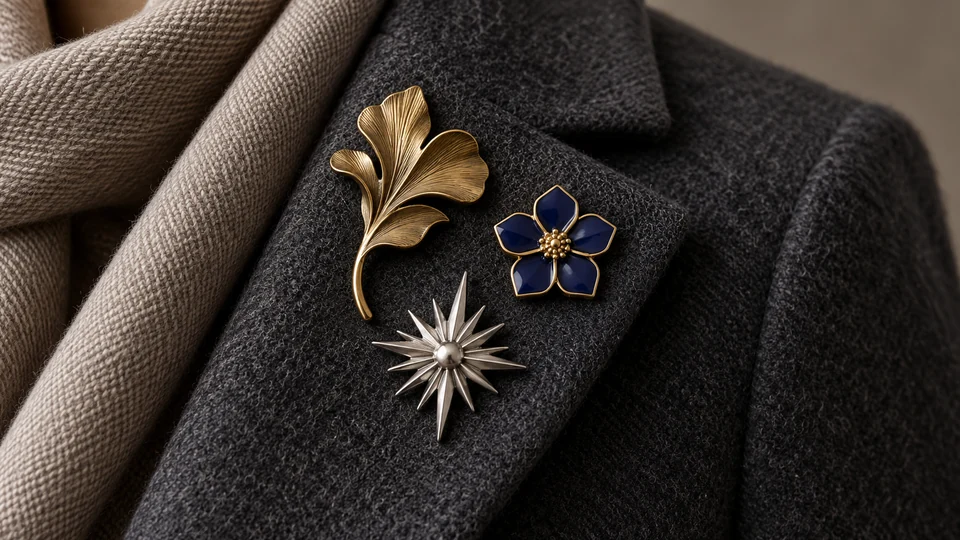
Short answer: the 2026 brooch revival gives brands a timely reason to rethink the humble custom metal pin as a small fashion accessory rather than a logo giveaway. A pin is more likely to feel wearable when it has a recognizable silhouette, a motif the audience cares about, comfortable proportions, a finish that suits the artwork and an attachment selected for the garment. Trend coverage is a source of inspiration—not proof that every pin category is selling more—so use it to guide a thoughtful brief, then test the design with real buyers or wearers.
What the 2026 brooch revival signals for custom metal pins
Brooches have appeared in recent fashion coverage as expressive styling pieces: pinned to a lapel, scarf, knit, belt loop or other part of an outfit. British Vogue’s autumn/winter 2026 runway roundup describes a mix of symbolic and playful motifs, including animal forms, florals, stars and ribbon-like rosettes. The useful lesson for a custom pin brief is not to copy any one runway look. It is that a pin can be a visible expression of personality, affiliation or a story—not only a miniature space for a company logo.
There is also a measurable search signal behind the conversation. Pinterest’s official Pinterest Predicts 2026 trend report identifies “brooch aesthetic” searches as up 110% and “brooch for men suit” as up 90%. The report describes global English-language Pinterest searches, comparing September 2024–August 2025 with September 2023–August 2024. These are platform-specific search changes used in a trend forecast; they are not sales data for lapel pins, a measure of demand in every country, or evidence that custom metal brooch orders have risen by the same amount.
For brand teams, the opening is to create a pin that feels at home in someone’s wardrobe or collection. A distinctive shape, considered metalwork and a meaningful motif can make a custom brooch pin feel less disposable than a generic logo token. This is an opportunity to explore in a campaign brief, not a guarantee of consumer response. Before committing to a large production quantity, show design directions to representative customers, employees or retail buyers and ask which one they would actually wear or keep.
Design for real wear, not just a digital mockup
A pin that looks impressive at 800 pixels on a presentation slide can become awkward once it is manufactured at a few centimeters wide. Good custom metal brooch design balances visual character with the physical realities of clothing: the weight the fabric can support, how sharp or delicate the silhouette feels, where the pin will sit, and whether the attachment can hold it securely.
1. Name the wearer and the occasion first
Write down who is expected to wear or receive the piece. A fashion label launching a seasonal capsule, a museum selling a collection-inspired souvenir, a conference rewarding speakers and a company thanking employees need different visual languages. “Professional women aged 25–40” may still be too broad; add context such as what the person wears, what they collect, what the pin commemorates and whether it is a retail purchase, a membership item or a gift.
Then define the desired action. Should someone wear the pin on a coat, add it to a bag, trade it at an event, display it on a card, or collect a new version each season? If the intended location is a scarf, thick coat or bag strap, communicate that to the manufacturer. The right metal pin backing depends on the application; a clutch, locking clutch or magnet does not suit every fabric, shape or weight.
2. Start with a silhouette that reads at a glance
On a small object, the outer contour does much of the storytelling. A leaf, starburst, animal profile, architectural arch or abstract flower is often recognizable before a viewer can inspect the enamel. Sketch the outline in solid black first. If the concept is no longer identifiable without color, simplify the shape or remove secondary details before choosing a finish.
Scale the design to its real use. A subtle lapel pin needs a compact silhouette and restrained detail; a statement brooch can be larger, but it should not be so broad or heavy that it pulls on delicate clothing. Ask the designer to show the artwork at actual size alongside a familiar object or ruler. Confirm the finished width, height and thickness on the quote and approval proof rather than relying on an unscaled screen preview.
3. Tell one story instead of placing every message on the metal
A common source of clutter is asking one small pin to carry the logo, slogan, year, event name, URL, mascot and decorative frame. Choose a primary idea and let secondary information live on the backing card or package. For an organization, the pin might carry a recognizable emblem while the card explains the event or milestone. For a retail collaboration, the metal piece can focus on the character or artwork while the card identifies the artist and edition.
Use typography only when it remains readable at finished size. Thin strokes, tiny counters inside letters and long curved text can close up in production or be difficult to see against a reflective finish. If a date or short word matters, include it in the artwork and ask the manufacturer to review the minimum line and letter details for the chosen process. Keep longer copy off the pin face.
4. Make the finish support the artwork
Metal color is not just a decorative choice; it changes contrast and the overall mood. Polished gold can feel warm and classic, silver can look cooler and crisp, black nickel can add a darker contemporary contrast, and antique plating can make recessed areas more visible. These are visual starting points, not universal rules—actual color depends on the metal, plating process, lighting and adjacent enamel colors.
Before deciding, compare a few finish samples under the lighting where the pin will be worn or sold. Check the front, edge and reverse; confirm whether the desired effect is mirror-bright, satin, brushed or intentionally aged. Our guide to gold, silver and antique plating explains common visual differences. For colored designs, compare soft and hard enamel pins with the manufacturer and confirm the final appearance on a production proof or sample.
5. Treat comfort and construction as part of the design
A wearable piece is a small object that touches clothing and skin. Avoid needle-like decorative projections, sharp exposed corners or thin parts that could bend during handling. A delicate silhouette may need a simpler cut line or a little more metal around a narrow connection. If the design has a tall center, broad wings or other protruding sections, ask how it will sit against the garment and whether the back needs more than one post.
Attachment is especially important on an oversized or asymmetric brooch. A single post can allow a wide piece to rotate; adding posts may improve stability but also affects how the pin can be worn and how the back is finished. Magnets avoid puncturing fabric, though their holding power depends on the materials and thickness involved and they may not suit every garment. Ask for the manufacturer’s recommendation based on the actual design, target fabric and use case. Do not choose a backing by name alone; confirm the fit on a sample when security or delicate clothing is a concern.
6. Plan the back and presentation, not only the front
Recipients see the back when they attach the pin and the front when they wear it, so both deserve attention. Decide whether the reverse should be plain, textured, engraved with a short mark or finished to match the front. Keep technical attachment parts clear of any requested engraving. A backing card can carry the brand story, care note, collection name or event context without shrinking the artwork to make room for text.
For a retail item, test whether the card or box protects the projecting post and whether the product is easy to remove and reattach. For a recognition gift, make sure the presentation looks intentional when handed over. Packaging changes should be included early in a quote because individual cards, bags, boxes, assembly and sorting can add cost and production time. See the site’s custom enamel pin cost guide for common pricing factors.
Four design directions that translate the trend into a brand-ready pin
The following are creative routes to explore—not a claim that every direction is a proven consumer bestseller. Pick the one that fits your audience and product story, then test it with a rough sketch before investing in detailed tooling.
- Botanical and sculptural: Use a leaf, flower, seedpod or branch as the main form. Raised metal lines can suggest veins and texture; a small enamel area can add a single accent without turning the piece into a flat printed badge. This route can work for lifestyle, garden, hospitality or nature-related brands when the motif genuinely connects to the organization.
- Symbolic and personal: Build the design around a recognizable emblem, star, animal or local symbol that has meaning to a defined community. A short anniversary date or edition number can help distinguish a series, but avoid implying a limited edition unless the quantity is actually controlled and described clearly.
- Graphic and color-forward: Use a bold outline, strong color blocking and one confident focal shape. The design should remain legible from a few feet away and still look balanced when viewed close up. Compare metal-outline contrast and enamel colors against real finish samples instead of assuming that screen colors will reproduce exactly.
- Heritage or place-inspired: Adapt a building profile, archival motif, regional flower or collection artifact into a simplified wearable form. Verify that the client owns or is allowed to use any source illustration, symbol, character or architectural artwork. A visual reference can inspire a direction without copying protected artwork or a designer’s exact motif.
These directions can be applied to a single piece or a coordinated set. A series works best when each design has a reason to exist—different chapters of an exhibition, annual event themes, regional locations or stages in a member journey. Keep one or two visual elements consistent, such as the outline thickness, metal color or card layout, so the pieces belong together without becoming repetitive.
Choose a manufacturing approach that preserves the idea
Once the concept is approved, the artwork must be translated into surfaces and boundaries the chosen manufacturing method can reproduce. Custom metal pins can be made with raised and recessed metal, colored enamel or combinations of these treatments; the best route depends on shape, detail, finish, budget and the producer’s capabilities. A concept intended to look sculptural may benefit from relief, while a clean emblem with separate color fields may be easier to read with enamel.
Design files should make the intended result explicit. Mark which areas are metal, which are recessed, which colors are enamel and where the outline follows the die-cut edge. Provide vector artwork when available, and supply brand color references for discussion. If you begin with an AI sketch or raster image, simplify it into an editable production drawing before requesting a final quote; our production-ready enamel pin artwork guide covers that handoff.
Do not assume every hairline, gradient, tiny hole or subtle shadow can be recreated in metal. Ask the maker to flag details that may close up, lose contrast or require a different process. If two approaches are possible, compare them on the same size and artwork: a proof that shows only a polished 3D render can hide the constraints of actual line widths, color separations and plating.
A practical path from trend idea to approved sample
- Write a one-paragraph brief. State the wearer, purpose, distribution channel, approximate quantity, target size and required date. Add one sentence describing what the pin should make the recipient feel or remember.
- Explore two or three distinct directions. Show a bold, minimal option beside a more detailed or story-led option. Keep the silhouette different enough that feedback helps you choose a route, rather than asking reviewers to compare minor color changes.
- Check the sketch at physical scale. Review the smallest text, gaps, narrow metal bridges and overall weight. Ask a few target wearers which design they would wear, where they would put it and what feels confusing or too promotional.
- Request a production review before finalizing art. Confirm the manufacturing process, metal base, plating, enamel method, post or magnet, post location, packaging and any minimum detail requirements. Save a dated proof with dimensions and finish notes.
- Approve the sample against the brief. Check color, border definition, polished or antique areas, edges, attachment alignment and the way the pin sits on the intended fabric. If the sample differs from the approved proof, agree on the correction before bulk production.
- Plan delivery with realistic buffers. Include proof revisions, sample transit, approval, bulk manufacturing, packing and shipping in the schedule. A supplier’s stated production estimate is not the same as a guaranteed in-hand date; confirm the current timeline for the specific order and destination.
This sequence is consistent with the production stages in the site’s metal badge manufacturing process guide: artwork review, tooling and forming, finishing, attachment, inspection and packing. The exact process varies by pin construction, so ask the manufacturer to confirm which stages apply to your design.
What the market research does—and does not—tell a pin buyer
Trend coverage can help a marketing team start a conversation, but it cannot replace product testing. Pinterest’s figures describe search behavior on Pinterest, and runway reporting describes designs shown by selected fashion houses. Neither source reports the number of custom metal pins sold, the performance of corporate lapel pins or the likely conversion rate for a particular campaign.
There is a broader branded-merchandise signal worth considering. In its October 2026 PPAI Research article on buyer expectations, the Promotional Products Association International reports a survey of 257 end buyers and 250 agency respondents. Among end buyers, 79% selected high quality as a reason branded merchandise is worth keeping; 47% selected everyday usefulness and 46% good design. Poor quality was the most-cited discard reason at 59%.
Those figures apply to branded merchandise broadly, not brooches or enamel pins specifically. A reasonable application for pin makers and buyers is to avoid treating a current aesthetic as a shortcut: quality control, audience relevance and design still matter. Set up a simple pilot, ask recipients how they used the pin and compare the result with your campaign goal before repeating or expanding the order.
Custom metal pin buyer checklist
Use this list when discussing custom metal brooches, fashion pins, lapel pins or an enamel pin collection with a manufacturer:
- Who is the wearer, and what garments or accessories will they pin it to?
- What is the purpose: fashion retail, membership, event merchandise, a collaboration, a souvenir or recognition?
- What are the approximate finished width, height and thickness? Is the piece a subtle lapel pin or a larger statement brooch?
- Which parts should be raised metal, recessed metal, enamel or a texture? Which plating colors should be quoted?
- How many designs and units are needed? Are there separate versions, regions or campaign dates?
- Which attachment suits the design and intended fabric? Does a wide or heavy shape need an additional post or a different backing?
- Does the reverse need engraving? Is there a backing card, protective sleeve, retail packaging or gift box?
- What does the quote include: tooling, proof, sample, packaging, freight, duties or delivery? Ask suppliers to itemize assumptions.
- What is the required in-hand date, shipping destination and latest approval date? Add contingency for revisions and transit.
- Who owns the artwork and approvals? Confirm permission for logos, character art, licensed motifs and third-party references.
For a broader product overview, compare the site’s custom metal pins and custom lapel pins pages. When your brief is ready, include the artwork, quantity range, desired size, finish, attachment, packaging and delivery date in a quote request. A clear brief makes it easier to compare options on the same assumptions.
Frequently asked questions
Are brooches back in style in 2026?
Brooches are a visible theme in 2026 fashion coverage and Pinterest’s 2026 trend report. Pinterest reports growth in related searches, while runway reporting shows designers using brooches in varied ways. These are trend signals, not proof of sales growth for every type of brooch, market or promotional pin.
What is the difference between a brooch and a lapel pin?
The terms overlap. “Lapel pin” often refers to a smaller wearable pin with a post and clutch, commonly used for a logo, symbol or event. “Brooch” is often used for a more decorative accessory, but there is no universal size line separating the two. Choose product language that accurately describes the finished piece and how customers will wear it.
How do I make a custom metal brooch people will actually wear?
Design around the wearer and the garment. Use a clear silhouette and a meaningful motif, keep important details legible at actual size, select a finish that supports contrast and specify a backing suited to the pin’s dimensions and weight. Ask target wearers for feedback and approve a production proof or physical sample.
Which metal finish is best for custom brooch pins?
There is no single best finish. Polished gold or silver can produce crisp contrast, antique plating can emphasize recessed detail, and enamel can add defined color. The right choice depends on the artwork, brand palette, desired character and budget. Review physical finish examples and confirm the approved result with the manufacturer.
Can a custom lapel pin be made as a larger statement brooch?
Often, a pin concept can be adapted to a larger format, but the size and shape may change its weight, balance and attachment needs. Discuss the intended garment and wear position with the manufacturer before finalizing the artwork. A wide or asymmetric design may need a different post layout or a sample fitting.
What files do I need to order a custom metal pin?
Send vector artwork if available, along with a reference image, desired dimensions, quantity, finish, enamel colors, backing, packaging and delivery requirements. Clearly identify which artwork elements are essential and whether the supplier may simplify details for manufacturability. Review the final proof at actual size before approving production.
Does the 2026 brooch trend guarantee strong demand for branded pins?
No. Search and fashion coverage suggest an aesthetic worth testing, not a guaranteed business result. Validate the idea with the audience you intend to reach, start with a suitable quantity and assess wear, retention, sales or engagement against the campaign’s goal.
Sources and further reading
- Pinterest Predicts 2026 Trend Report — primary source for Pinterest’s brooch-related search signals and the report’s data scope.
- British Vogue, “This Personality-Led Jewellery Trend Is Taking Over The Catwalks In 2026” — autumn/winter 2026 runway examples and styling context.
- PPAI, “Better Merch Is Better Marketing” — 2026 buyer and agency research on quality, design and branded merchandise; its findings are category-wide, not specific to pins.
Editorial note: The trend and survey statistics above are attributed to their original publishers and retain their stated scope. The product recommendations are manufacturing-oriented guidance for planning a custom pin; they are not a claim that brooch demand or sales have increased by the same percentages.